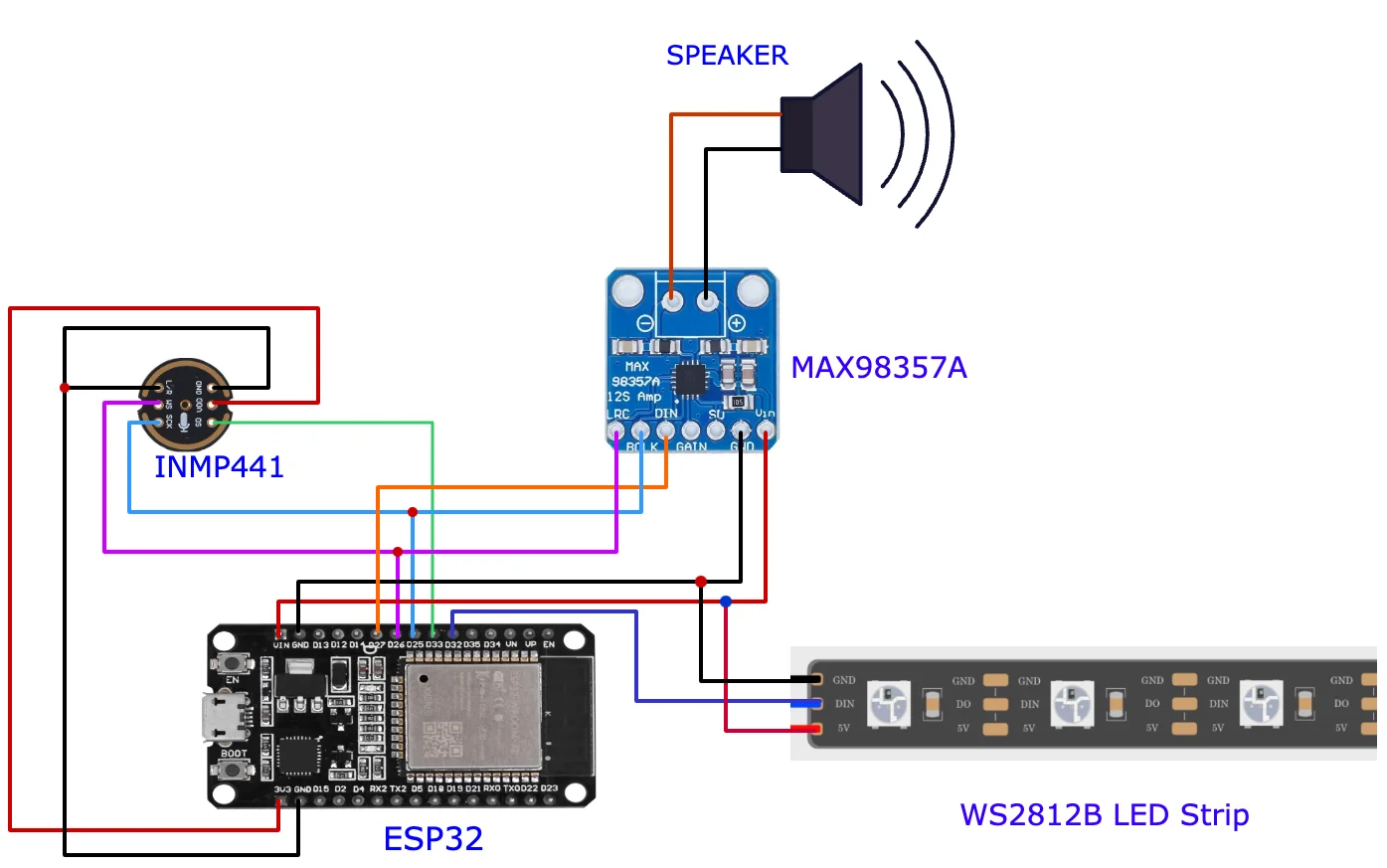
How to Build a Local AI Voice Assistant with a Raspberry Pi Circuit Diagram
How to Build a Local AI Voice Assistant with a Raspberry Pi Circuit Diagram API.AI is an organization that specializes in Artificial Intelligence and Natural Language Processing. It was acquired by Google (Hence the free) in 2014 and helps developers (You da Tony Stark now!) make AI assistants for a variety of needs. Its dynamic and easy to use interface allows everyone to develop bots for businesses, games, and much more.

The idea is straightforward: we are going to create a voice assistant reminiscent of Jarvis or Friday from the iconic Iron Man movies, which can operate offline on your computer.

Build your own voice assistant and run it locally: Whisper + Ollama ... Circuit Diagram
By adhering to the steps outlined in this guide and leveraging the capabilities of Python, Assembly AI, Llama 3, and 11 Labs APIs, developers can create an AI voice chatbot that excels in Programming the Voice Assistant. We will now code up the voice assistant using C++ in the PlatformIO IDE. The complete code is available on GitHub, but let's walk through the key parts: 1 This voice assistant seamlessly merges the realms of embedded systems and modern AI, creating a responsive and intuitive user experience. The key components that power this project include: ESP32 Microcontroller: The brain of the operation, handling audio input/output and Wi-Fi connectivity.
10 Steps to Create Your Own AI Voice Assistant from Scratch . Despite its simplicity, an AI voice assistant isn't easy to build. Both technologies are the core of a successful AI-based voice assistant. Sentiment analysis allows the app to interpret the underlying sentiment when a user expresses a verbal command. Meanwhile, natural

Build Your Own Voice Assistant with Wake Word Detection on ESP32 Circuit Diagram
Build a voice assistant using the Google Cloud Speech-to-Text API and the Google Cloud Natural Language API; Use the Dialogflow platform to create a conversational interface; Integrate the voice assistant with a web application using the Google Cloud Client Library; To complete this tutorial, you will need the following prerequisites: